
THREE SHORT NOTES ON BOCHEŃSKI'S ROMAN TRILOGY
The most important literary work to come out of Eastern Europe since WW2 is not an easy read.
2/15/20266 min read
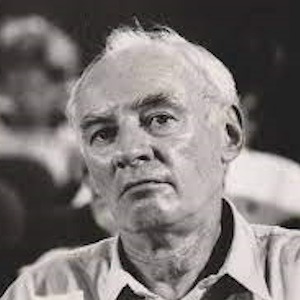
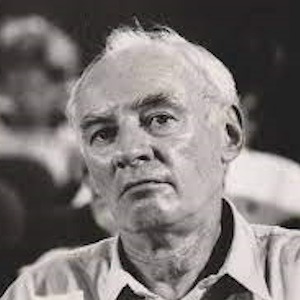
There are three things to bear in mind as you set out to read the Trilogy.
1. The Trilogy is a politically entangled work
On its literary merits, Jacek Bocheński’s Roman Trilogy is one the greatest literary works to have come out of Eastern Europe since World War II. But in the Polish mind it remains entangled with the history of the Polish struggle to restore democracy. So I should tell that story first.
Like many young people who came of age during World War II under German rather than Russian occupation, Jacek Bocheński went through a period of youthful enthrallment with communism. He served the new system eagerly as a journalist—effectively, its propaganda operative. But as he watched the promised “temporary” dictatorship of the communist party turn into a permanent feature, he became disillusioned with both the ideology and the practice. Wishing to distance himself from it, he gave up journalism and turned his pen to an abstract subject unrelated, as he thought, to politics or current events: he decided to write commentaries on the books of Julius Caesar. What, after all, could possibly be political about a book two thousand years old?
In the resulting Divine Julius, Bocheński produced a literary masterpiece: a picaresque account of how a cynical but charming villain overthrows a republic. The book starts out as a how-to manual: you want to do it? This is how it is done. But its innovative prose, the beauty of its lyrical parts, its psychological insights, and its witty essayistic asides are brilliant literature and brought Bocheński an instant critical success and a prestigious literary award. Alas, within days, the communist party intervened: the prize was revoked and the book was withdrawn from the market: too many readers—including some in the communist leadership—recognized as familiar the mechanisms of manufactured consent described in it. Without having intended to do so, Jacek Bocheński found himself celebrated as a critic of the regime.
Perhaps partly in response to the suppression of Divine Julius, Bocheński gradually became an open critic of the regime and eventually emerged as one of Poland’s leading dissident figures. His subsequent publishing history became inseparable from the political struggle unfolding in Poland.
All successful long-lasting dictatorships rely on an ebb-and-flow of oppression—alternating periods of “tightening the screw” (less freedom, more oppression) with periods of “thaw” (more freedom, less oppression)—to regulate and control the public mood. The appearance and disappearance of Bocheński’s books became a barometer of the Polish political weather.
The second book of the Roman Trilogy, Naso the Poet, was published in 1969, during a period of a thaw, but the censors were eager to prevent it from being read as an attack on the regime and subjected it to thousands of cuts and revisions—a clear sign that Bocheński was now under special scrutiny. Some would have taken that as a warning to mend their ways. Others might have taken it up as a challenge. Temperamentally, Bocheński belonged to the second group.
Then, in 1976, the hammer fell: the censorship office placed Bocheński under an interdict. Henceforth, not only would none of his works be published, but even the very mention of his name in the media was strictly forbidden. It was a damnatio memoriae, just like Ovid’s: we thus can read Naso the Poet as a kind of Chronicle of a Death Foretold. In response, like many great writers before him, Bocheński turned to self-publishing: he co-founded and co-edited Zapis, an underground literary journal. In high school, we passed this contraband from hand to hand—copied somewhere in a garage on some primitive duplicating machine, some copies barely legible, all of them dog-eared—and took it home for our parents to read.
I believe I read the first fragments of Tiberius Caesar in Zapis. I read others after emigrating from Poland, in the Paris-based Polish literary journal Kultura. Like most of us, I knew the book was coming, and I waited. But the political events of the 1980s, which drew Bocheński into full-time dissident activity, were not conducive to the writing of demanding literary prose. He did not return to Tiberius Caesar until after Poland regained its independence, finally completing it only in 2008.
Given the modern political relevance readers saw in Divine Julius (reading it as a roman à clef: “Julius Caesar is Gomułka! Cicero is Iwaszkiewicz!”), it is hardly surprising that current political issues come to the fore as the trilogy progresses and that in its final volume, Tiberius, they become central.
Yet, we should keep in mind Bocheński’s own words: “I did not write these books to criticize the communist dictatorship or any particular political figure. I wrote these books to show the mechanisms that govern all dictatorships everywhere: terror, manipulation, corruption, betrayal, secret police, informing.”[1] From Tiberius’s Rome to Argentina, the pattern is universal.
2. The polyphonic style
Each volume of the trilogy is written in a slightly different style. While Divine Julius is ironic, picaresque, and at times hilarious—Would you like to become a god? It has been done before, you know; there are techniques, it begins—Naso the Poet is a novel about a poet and is itself poetic. Parts of it contain some of the most beautiful writing to have come out of Poland in the last century:
There was always the question of whether the shutters should be opened or closed. When closed, they protected against the heat, but when opened, they gave the pleasant illusion of a breeze. A brief moment of reflection before settling down on the bed. Lazy heaviness and an uncertain sense of reality. What about this window? All by itself, the hand made a slight movement and pulled the latch with an unclear intention. Only then did it turn out that one shutter would remain closed and the other slightly ajar.
And Tiberius is… polyphonic.
One way to capture a slice of the universe is through dialogue, in which one person says something and another responds. This technique tries to disentangle the confusion of human behavior into distinct component parts and describe each in its own terms. Plato did this and his example inspired two and a half millennia of literature, with speech divided into discrete utterances, separated by quotation marks and assigned to specific speakers. In Galileo’s famous dialogue,[2] the Copernican system, represented by one speaker, debates the Ptolemaic system, represented by another.
Useful as it is, the technique does not capture the texture of reality. This is not how human beings speak. We speak in disjointed phrases, in a kind of cacophony of views and reactions—a cacophony not only around us but within us, since each of us often experiences conflicting emotions and holds contradictory opinions. Bocheński’s style sets out to capture that cacophony by removing quotation marks, by refusing to assign speech, by mingling two or three voices within a single paragraph and letting each speak—sometimes shout—through and past the others. (See the Transfer or Power, pp. 140-141 in Tiberius Caesar). This technique is not common in the English literature, and it is one of the greatest challenges this prose. The way to navigate it is not to look for neat order and clear attributions, as one might in Jane Austen, but to let the cacophony wash over you and allow its overall impression to emerge gradually. This is not easy prose, but it is not difficult for the sake of display. It is difficult for a reason: politics, like life itself, is confused, and we all have to learn to cut through the noise. Bocheński is a good guide in this, but only if you read him carefully. He has something important to say, but it is not on the surface. It comes to you only after you have read it all—perhaps twice—and let it stew in your mind for a few days.
3. The task of interpretation
Tiberius Caesar imagines his readers—whom he calls the “participants of my tour”—joining the general cacophony of voices. The result is embarrassing. His readers cannot help but debate Marxist theory, feminism, sexual liberation, and recent history in the way we usually do: haphazardly, confusedly, and… shallowly. These are not my favorite parts of Tiberius, but they are relevant. While preparing the trilogy for English publication, I read every academic paper on it—and there is rather a lot of them: Bocheński has become something of a cottage industry in the Polish academia. Alas, by and large, I was underwhelmed. My impression was that most academics discuss Bocheński like his readers in Tiberius discuss Marxism: their ideas are second hand and the reading of the text is shallow. It is difficult to escape the impression that the academics somehow miss the point.
And the point is for us to figure out. A lesser writer might have ended the story of Cato’s death (the Epilogue of Divine Julius, pages 177–188) with a line like: “and all his noble striving proved in vain.” Or he might have said: “Defeated and forced to commit suicide, Cato nevertheless won a great moral victory over Caesar.” Bocheński does none of this. He ends with the words: “he ripped the wound wide open with his bare hands and died.” It is up to the reader to decide what moral to draw from the story.
Tiberius does not spell out its message, either. It portrays Tiberius struggling with the problem of power, and the consequences of that struggle for others. We, the readers, see the workings of his mind and the minds of his victims. The picture I draw from it is terrifying: Tiberius is an intellectual and moral void. All he knows is how to remain in power at any cost. Look around you. See Lukashenko. See Putin. See Kim Jong Il.
To me, while Divine Julius is funny and Naso the Poet is touching, Tiberius Caesar is frightening. Let us see how you read it.
[1] Conversation with translator, August 22, 2022.
[2] Dialogue Concerning the Two Chief World Systems (Dialogo sopra i due massimi sistemi del mondo), 1632